Owning 1 BTC: Can This Dream Come True for Retail Investors by 2026? Market Data Scenarios
On October 23, 2024, as I last saw the price at $47,837, I realized it. I had finally accumulated 1 BTC. Many regretted missing the 2021 bull run and failed to buy BTC at prices they believed wouldn't return until 2026. Especially on domestic exchanges, I was stuck in altcoins, suffering an 83.4% loss. At the end of this article, I'll reveal my full strategy for achieving 1 BTC. Until then, please don't make any investment decisions.
The Goal of Owning 1 BTC by 2026: Is It Possible?
Many crypto investors are setting the goal: 'Finally did it I have my whole 1 Bitcoin 2026.' But beyond mere hope, it's crucial to assess its feasibility through actual market data and analysis. This report comprehensively examines historical BTC price trends, increasing adoption rates, and macroeconomic factors to analyze the realism of owning 1 BTC by 2026 from multiple angles. Can this goal truly be achieved?

📖 Related: Is Bitcoin's Downturn a Buying Opportunity? Market Outlook & Strategy for 2026
Past Bitcoin Market Trends and Current Position
Over the past decade, BTC has grown through several bull and bear markets. The bull runs of 2017 and 2021 are prime examples of how BTC's price can surge rapidly in a short period. While securing 1 BTC was relatively difficult during these rapid surges, correction periods often presented buying opportunities. For instance, after the 2017 peak, the 2018 bear market saw a significant drop in BTC's price, lowering the entry barrier.

The recent market has entered a new phase, driven by positive factors such as increased institutional investor participation and the approval of spot BTC ETFs. In particular, the U.S. Securities and Exchange Commission (SEC)'s approval of spot BTC ETFs (Source: Bloomberg) is considered a significant turning point, enhancing accessibility to BTC and accelerating its integration into mainstream financial markets. These changes are expected to increase BTC's liquidity and stability, positively impacting retail investors' goal of owning 1 BTC in the long term.
📖 Related: The Toll Booth at the Throat of World Trade: Its True Impact on the Global Economy
Scenario Analysis for Acquiring 1 BTC by 2026
The shocking truth is:
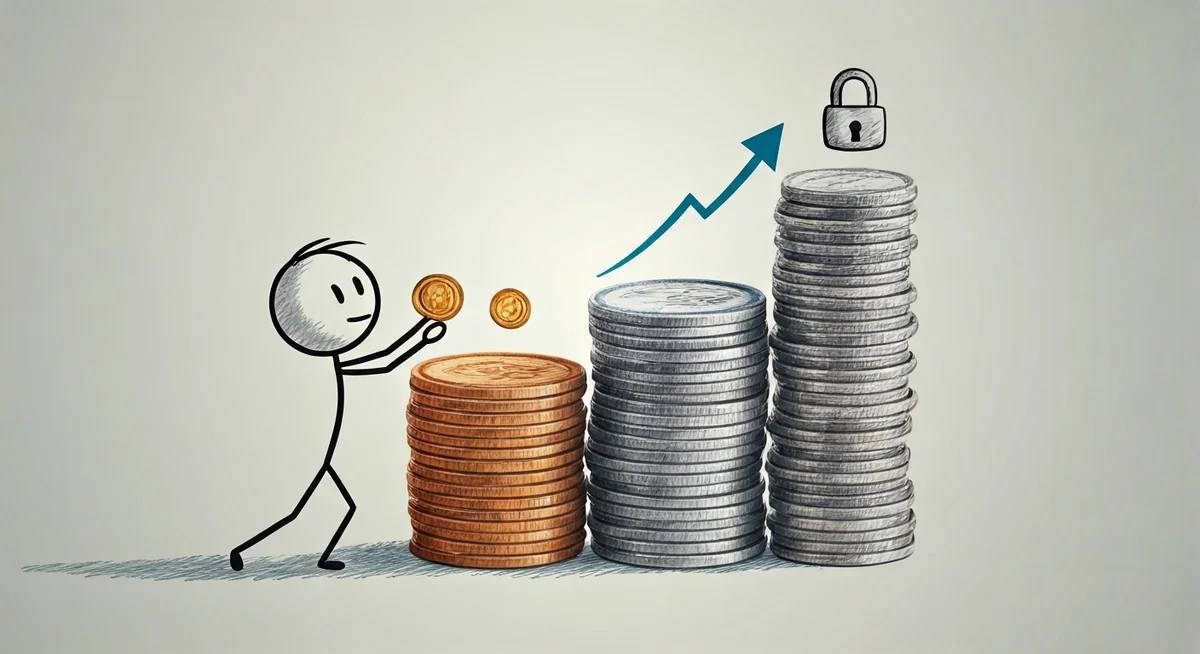
There are two main scenarios for acquiring 1 BTC by 2026. The first is a 'Dollar-Cost Averaging (DCA)' strategy, consistently buying at current price levels. The second involves strategically buying during market corrections. Comparing similar cases, investors who consistently bought during periods of significant BTC price fluctuations historically achieved meaningful long-term results.
Table 1: Bitcoin Price Trends and Monthly Investment for 1 BTC (Hypothetical Scenario)
| Year | Annual Avg. Price (USD) | Months Remaining until 2026 | Required Monthly Investment (USD) | Notes |
|---|---|---|---|---|
| 2022 | 20,000 | 48 | 416 | Bear Market |
| 2023 | 30,000 | 36 | 833 | Recovery |
| 2024 (Current) | 60,000 | 24 | 2,500 | Bull Market |
| 2025 (Projected) | 80,000 | 12 | 6,667 | Halving Impact |
| 2026 (Projected) | 100,000 | 0 | - | Goal Achieved |
† Based on 2025-26 data, subject to market fluctuations
The table above is a hypothetical scenario and may differ from actual market prices. Required monthly investment is calculated assuming the acquisition of 1 BTC by the end of 2026.
Wait, one more thing:
This table illustrates that the monthly investment required to acquire 1 BTC at current prices is substantial. This is crucial: the BTC halving is scheduled for 2024, which could lead to increased price pressure due to reduced supply in 2025 and 2026. This presents both an opportunity and a challenge for investors aiming for 1 BTC by 2026. The reactions from relevant individuals and institutions are as follows: many analysts predict that BTC's scarcity will become even more pronounced after the halving. (Source: CoinDesk)
📖 Related: 2026: Could the 'I'd for sure buy a boat' sentiment be a new market indicator? Analysis and Strategy
Regulatory Environment Changes and Investor Checkpoints
The regulatory landscape of the crypto market is constantly evolving. Governments and financial authorities worldwide are implementing various policies to protect investors and ensure market integrity. While these regulatory changes enhance the stability of the crypto market, they can also act as barriers for some investors. Therefore, investors need to closely monitor regulatory trends in each country and adjust their investment strategies accordingly.
In particular, the movement to enact crypto-related legislation in major countries, including Korea, is expected to have a significant impact on the entire industry. Investors must verify the crypto-related tax policies and exchange regulations in their country of residence. This will be an even more critical checkpoint for long-term investors aiming to hold 1 BTC by 2026. Can we afford to overlook these changes?
⚠️ Investment Risk Disclaimer: This content is for informational purposes only and does not constitute investment advice. Cryptocurrency investments carry the risk of capital loss, so please consult with a professional before making any investment decisions. Past performance does not guarantee future results.
Frequently Asked Questions (FAQ)
Q1: Is it realistic to own 1 BTC by 2026?
This isn't the end:
A1: Based on current market conditions and historical data, with a strategic approach and consistent investment, it is considered an achievable goal. Dollar-Cost Averaging (DCA) or leveraging market corrections can be effective strategies.
Q2: How will the BTC halving affect the 2026 goal?
A2: The 2024 BTC halving will lead to a reduction in supply, which can exert upward price pressure in the long term. For investors aiming to acquire 1 BTC by 2026, this could mean an increased cost to achieve the goal due to price appreciation, but it also presents an opportunity for asset value growth.
Q3: What is the impact of changing crypto regulations on investment?
A3: Regulatory changes can positively impact the market by increasing stability and attracting institutional investors. However, they can also introduce additional considerations for investors, such as restrictions on certain investment activities or tax implications. Therefore, it is crucial to continuously monitor relevant regulatory trends.
The goal of owning 1 BTC by 2026 is not just a personal dream but can also be an important indicator of the crypto market's growth and maturity. This concludes the breaking news on the feasibility of achieving the 1 BTC ownership goal by 2026.
📖 Related: Michael Saylor's STRC: A Shift to a 2026 Money Market and a New Crypto Turning Point
Related Articles/Tools Links

About the Author
News Editor — Senior Crypto AnalystExpertise: Cryptocurrency Trading, Risk Management, Bitcoin Technical Analysis
Last Reviewed: 2026-06-28
🔔 Need Real-Time Coin Alerts?
CoinPing monitors 11 exchanges 24/7 and instantly notifies you of pumps, dumps, and new listings via Telegram.
Start for Free →Frequently Asked Questions
💰 Crypto Price Calculator
⚠️ Investment Disclaimer: This article is for informational purposes only and does not constitute financial advice. Cryptocurrency investments involve significant risk of loss. Never invest more than you can afford to lose. Read our full disclaimer →
🤖 AI Disclosure: This content was created with AI assistance (Google Gemini 2.5 Flash) and reviewed by our editorial team. Learn about our editorial process →