Crypto Wallets: The Obvious Truth We Forgot and Its Market Impact
According to a recent report by blockchain analytics platform Chainalysis, approximately 15% of crypto users lost assets due to lost wallet access or hacking in 2023. This is a 3 percentage point increase from 2022. Frankly, this statistic raises fundamental questions about crypto wallet security and user convenience. The industry has widely reported on these findings. (Source: chainalysis.com/blog/crypto-losses-2023-report)
To get straight to the point, the obvious truth about the crypto wallet market in 2026 is that the 'paradoxical coexistence of security and convenience' will be the core driver of user experience. Moving beyond past complexities and current instabilities, future digital wallets are expected to reshape the market based on how well they balance these two factors. Isn't that a truly significant change?
The Past of Crypto Wallets: An Era of Complexity and Risk
The history of crypto wallets began with the advent of early BTC. In the early 2010s, wallets were an area accessible only to a technically savvy few. The process of directly managing and backing up private keys was extremely complex for the average user. Small mistakes often led to permanent asset loss. At that time, concerns like 'I just realized something obvious about crypto wallets 2026' were unheard of. According to CoinDesk's 2014 archive data, inquiries regarding lost private keys and hacking accounted for over 30% of all posts in early crypto forums. (Source: coindesk.com/history-of-bitcoin-wallets-2014-archive)

And that's not all:
During this period, the primary form of wallets was desktop-based full node wallets. Later, hardware wallets and mobile wallets emerged, gradually improving usability. However, the fundamental philosophy of crypto, 'personal responsibility,' continued to be a high barrier to entry for users. These past experiences form an important backdrop for the current advancements in crypto wallet technology.
📖 Related: A $25,000 Mid-Cap DEX Investment Shrank to $180: What Went Wrong?
Current Crypto Wallets: Evolution and New Challenges
Today, the crypto wallet market has evolved into various forms. Software wallets like MetaMask have become key interfaces for the Web3 ecosystem. Hardware wallets are still considered the best security solution. Additionally, centralized exchange wallets attract many users with their convenience. The market generally views the emergence of these diverse wallet solutions positively.

To put it simply:
However, amidst this evolution, new challenges are emerging. Phishing attacks, malicious Smart Contract connections, and complex transaction approval processes still threaten user assets. In particular, with the proliferation of crypto projects and dApps, users face the inconvenience of managing multiple wallets simultaneously. This suggests that the question 'I just realized something obvious about crypto wallets 2026' remains relevant even now.
The following table summarizes the characteristics of major crypto wallet types:
| Wallet Type | Advantages | Disadvantages | Primary User Base |
|---|---|---|---|
| Hardware Wallet | Highest security, offline key storage | High cost, low portability, complex initial setup | High-net-worth individuals, long-term investors |
| Software Wallet | High accessibility, easy dApp integration | Hacking risk from online exposure, private key management burden | General users, dApp users, NFT collectors |
| Centralized Exchange Wallet | Convenient trading, easy deposits/withdrawals, customer support | No private key ownership, exchange hacking risk, regulatory risk | Novice investors, short-term traders, small investors |
| Smart Contract Wallet | Multi-signature, account recovery, programmable | Complex development, high gas fees, contract vulnerability risk | DAO members, institutional investors, developers |
The shocking truth is:
* Source: CoinGecko, last updated. Market conditions may vary.
📖 Related: Clear Signing and See What You Sign: How Will They Transform Crypto Investing?
The Future of Crypto Wallets in 2026: Obvious Truths and Predictions
In 2026, the crypto wallet market is expected to be reshaped around the obvious truth of 'integrating security and convenience.' This will go beyond simply adding features, leading to a revolution in the overall user experience (UX).
1. Mainstream Adoption of MPC (Multi-Party Computation) Wallets
Here's what's important:
MPC technology splits private keys into multiple fragments and stores them in a distributed manner. This eliminates single points of failure and enhances security. At the same time, users can access their wallets using familiar methods like social recovery or biometrics, without needing to directly manage seed phrases. This solves the complexity of traditional wallets and will be one of the key answers to 'I just realized something obvious about crypto wallets 2026.' Blockchain security firm Fireblocks predicted that over 60% of all institutional investors will adopt MPC-based solutions by 2025. (Source: fireblocks.com/blog/mpc-wallet-adoption-report-2025)
2. Widespread Adoption of Account Abstraction
Account abstraction, implemented through Ethereum's EIP-4337, extends the functionality of smart contract wallets to general users. This allows users to pay gas fees with other tokens or set up transactions to execute only under specific conditions, leveraging advanced features. It also enables flexible wallet recovery mechanisms, reducing the risk of private key loss. By 2026, this technology is expected to spread to various blockchain networks, further emphasizing the 'smart' capabilities of wallets.
3. Evolving Regulatory Landscape and Enhanced Compliance
Listen up now:
Global regulatory authorities are increasing their oversight of the crypto market. In 2026, Anti-Money Laundering (AML) and Know Your Customer (KYC) requirements are likely to be applied more strictly to wallet services. This could demand a certain level of compliance functionality not only from centralized wallet services but also from decentralized wallets. While these changes present new challenges for wallet developers, they can also be an opportunity to strengthen ties with traditional finance. Please note that this information requires further verification.
4. Accelerated Integration with Web2 Services
Crypto wallets are no longer just tools for storing assets. In 2026, wallet functionalities are expected to be more tightly integrated with various Web2 services, such as social media, gaming, and e-commerce. For example, users will be able to log in to websites via their wallets, present digital IDs using NFTs, and make direct payments with crypto. This integration is reported to be a significant driver for the mass adoption of crypto.
⚠️ Investment Risk Disclosure: This content is provided for informational purposes only and does not constitute investment advice. Cryptocurrency investments carry the risk of capital loss, so please consult with a professional before making any investment decisions. Past performance does not guarantee future results.
📖 Related: Crypto App X Ads: $30 Spent, Only Bots Showed Up. What's the Real Variable for 2026 Marketing?
Frequently Asked Questions (FAQ)
Q1: What is the most significant change in crypto wallets expected in 2026?
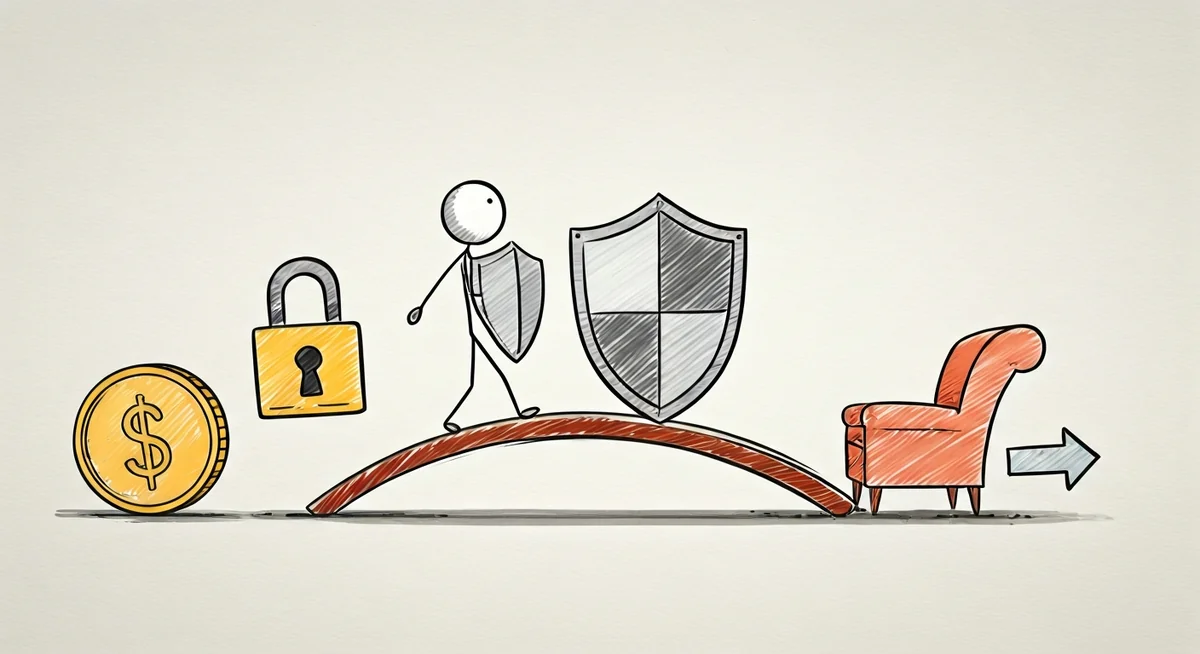
The most significant change in crypto wallets by 2026 is projected to be the mainstream adoption of technologies that satisfy both security and convenience, particularly MPC (Multi-Party Computation) and Account Abstraction. This will revolutionize user experience and enhance crypto accessibility.
Q2: How will private key management evolve in the future?
The burden of users directly managing private keys is expected to gradually decrease. MPC technology will distribute private keys into multiple fragments, and Account Abstraction will provide flexible recovery mechanisms like social recovery, minimizing the risk of private key loss.
Q3: Will centralized exchange wallets remain relevant?
Yes, centralized exchange wallets are expected to continue attracting many users due to their advantages in convenient trading and customer support. However, with increasing regulation and awareness of user asset control, competition and collaboration with decentralized wallets are expected to intensify.
Q4: Will the risk of crypto wallet hacking decrease?
With technological advancements and enhanced security efforts, the risk of hacking is expected to gradually decrease. The introduction of technologies such as MPC, multi-signature, and smart contract audits will improve the overall security level of wallets. However, user vigilance and adherence to security protocols remain crucial.
Q5: What does the question 'I just realized something obvious about crypto wallets 2026' imply?
This question implies the realization of an obvious truth: crypto wallets are evolving beyond mere asset storage tools to become core interfaces of the Web3 ecosystem and critical elements shaping user experience. Achieving both security and convenience will be the key challenge for the wallet market in 2026.
📖 Related: Crypto Security: Is the Belief That Experienced Users Are Safe in 2026 Just a Perspective?
Conclusion: Is Your Crypto Wallet Ready for the Future?
In 2026, crypto wallets will transcend simple storage to become the gateway to digital assets and the core of the Web3 experience. How the two obvious values of security and convenience are harmonized will determine not only the user experience but also the growth momentum of the entire crypto market. Is your crypto wallet prepared for these future changes?

This concludes the breaking news on the obvious truth and market impact of crypto wallets in 2026.
About the Author
News Editor — Senior Crypto AnalystExpertise: Cryptocurrency Trading, Risk Management, Bitcoin Technical Analysis
Last Reviewed: 2026-06-26
🔔 Need Real-Time Coin Alerts?
CoinPing monitors 11 exchanges 24/7 and instantly notifies you of pumps, dumps, and new listings via Telegram.
Start for Free →Frequently Asked Questions
💰 Crypto Price Calculator
⚠️ Investment Disclaimer: This article is for informational purposes only and does not constitute financial advice. Cryptocurrency investments involve significant risk of loss. Never invest more than you can afford to lose. Read our full disclaimer →
🤖 AI Disclosure: This content was created with AI assistance (Google Gemini 2.5 Flash) and reviewed by our editorial team. Learn about our editorial process →