CZ Mentions Freezing Bitcoin Satoshis to Counter Quantum Computing Risk: How Will the Market React?
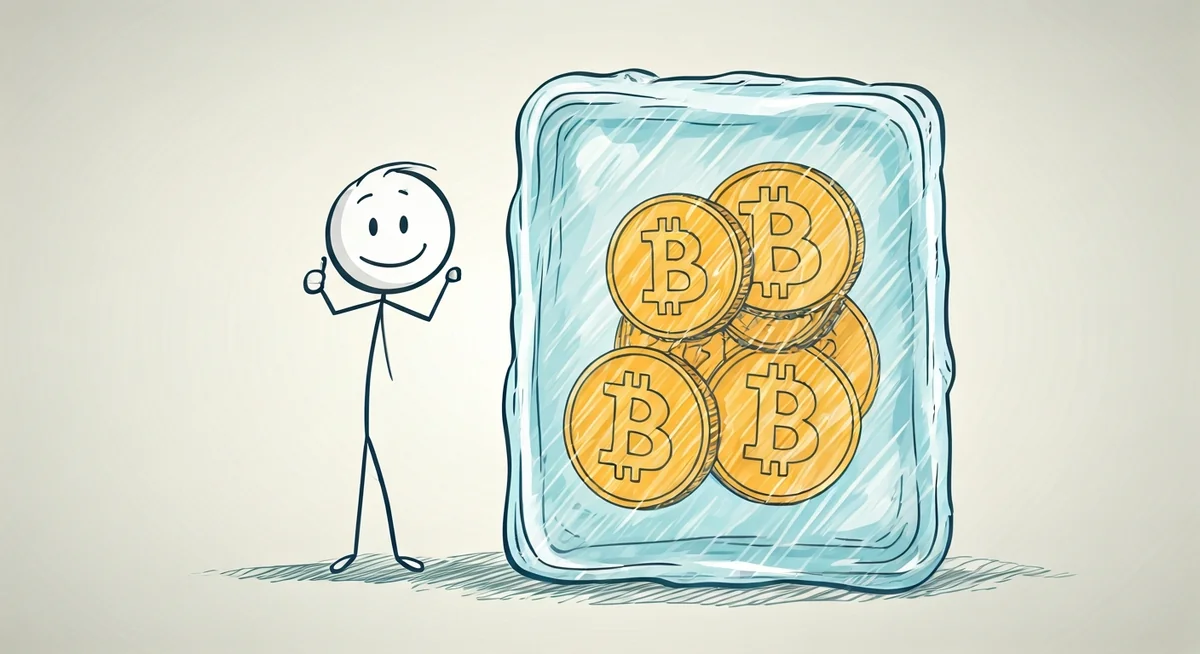
So, Binance's founder, Changpeng Zhao (CZ), recently floated a wild idea: freezing specific Satoshis. He's genuinely worried about quantum computing messing with the Bitcoin network, a threat that could get seriously real by 2026. This wasn't some offhand remark; official channels backed up his statement. Big news, right? We're probably looking at some market jitters in the short term. And this will absolutely kick off some heated debates about Bitcoin's long-term security and its perpetual governance headaches.
Quantum Computing Threat and CZ's Statement
Frankly, I've noticed many folks totally gloss over this. CZ's statement, if you ask me, looks like a preemptive strike against a massive security risk hanging over Bitcoin. For ages, people have been bugging out about elliptic curve cryptography (ECC)—Bitcoin's very foundation—becoming totally useless once quantum computing really takes off. Huge problem. Predictions hint at a "Quantum Supremacy" era possibly hitting by 2026, meaning real countermeasures are non-negotiable. His fix? Put a freeze on some of the early-mined Bitcoin—you know, "Satoshi's" coins. Will it work? Your guess is as good as mine.

📖 Related: Is the Altcoin Market Facing Its 'End' in 2026? The Sobering Reality Data Reveals
Raising the Issue: The Future of Bitcoin Security
Honestly, this is a critical detail that often gets missed. Bitcoin's security rests on public-key cryptography. But here’s the kicker: quantum computers can blast through calculations in minutes that'd tie up regular machines for millions of years. This could completely obliterate our current encryption. Picture it: the public keys of all those disclosed Bitcoin addresses? They're sitting ducks for quantum attacks. Big trouble. This could genuinely mess with the entire network. For instance, a 2017 paper warned that a quantum computer might crack Bitcoin private keys in less than 10 minutes (https://eprint.iacr.org/2017/548.pdf). That's a massive issue, one that could truly shake Bitcoin to its core.
📖 Related: Will Bitcoin Hit $150,000 by End of 2026? — The Hidden Data Twist
Cause Analysis: Advances in Quantum Computing and Bitcoin's Vulnerability
From my experience, people often miss this crucial bit.
Here’s the rundown:
Quantum computing tech is advancing way faster than anyone predicted. And big names like Google and IBM have even shouted from the rooftops about achieving quantum supremacy. These leaps forward throw up two main challenges for the Bitcoin network.
- First, there's a risk quantum computers could decode private keys used for transaction signatures.
- Second, it’s possible they could mess with the network's integrity by neutering hash functions during mining.
But hold on, there's more to unpack:
While the current Bitcoin network stays secure through a hash power-based Proof-of-Work (PoW) mechanism, some observers reckon quantum computing could even jeopardize that. This threat, highlighted by the phrase "CZ Floats Freezing Satoshis Bitcoin Over Quantum Risk 2026," suggests this could become a seriously pressing problem starting around 2026.
📖 Related: WhiteBIT Coin (WBT): Growth Scenarios and Key Variables for 2026
Exploring Solutions: Post-Quantum Cryptography and Satoshi Freezing
I’ve seen that many people just don't get this critical aspect. Two primary game plans are currently being debated to tackle this quantum computing menace.
The shocking truth is:
- One idea involves adopting "Post-Quantum Cryptography (PQC)" technology. This means developing and rolling out new, quantum-proof cryptographic algorithms. The U.S. National Institute of Standards and Technology (NIST) is already on it, planning to finalize PQC standards by 2024 (https://csrc.nist.gov/projects/post-quantum-cryptography). But applying PQC tech to Bitcoin would demand huge technical overhauls and community agreement.
- The other is a non-technical, governance-focused move, like CZ's "Satoshi freezing." This could be interpreted as an attempt to proactively shield assets in specific Bitcoin addresses vulnerable to quantum attacks. But this strategy could ignite a huge fight. Does it align with Bitcoin's decentralized ethos? Can it actually get widespread community backing? Just think about past controversies, like the Bitcoin Cash (BCH) hard fork; fundamental rule changes in Bitcoin have always sparked fierce arguments.
Market Reaction and Long-Term Impact Analysis
Have you ever noticed how often people overlook this key point? After CZ's statement, the crypto market might hit a patch of short-term uncertainty. And worries about Bitcoin's security could really put a damper on investor enthusiasm. Some folks might even rebalance their portfolios, prepping for such risks. Yet, in the long run, these discussions are a vital step forward. They show the Bitcoin network's willingness to proactively confront future threats and evolve. Plus, the Bitcoin dev community has been hip to the quantum computing threat for years, researching it diligently. So, CZ's statement could just thrust these conversations into the spotlight, spurring more active problem-solving. We’ll definitely be keeping an eye on what happens next.

📖 Related: Daily General Discussion: What Are the Real Market Variables?
Call to Action for Readers: Preparing for the Future
In my opinion, this is a huge blind spot for many. The quantum computing threat isn’t exclusive to Bitcoin; it hangs over all cryptocurrencies. Investors really need to be aware of these potential risks. So, continuously track related technological developments and community reactions. Specifically, it's crucial to closely watch what security upgrades Bitcoin and other crypto projects implement before that 2026 deadline. We'll be tracking and reporting on this matter's future progress, you can bet on it.

About the Author
News Editor — Senior Crypto AnalystExpertise: Cryptocurrency Trading, Risk Management, Bitcoin Technical Analysis
Last Reviewed: 2026-06-21
> ⚠️ Investment Risk Disclaimer: This content is for informational purposes only and does not constitute investment advice. Cryptocurrency investments carry the risk of capital loss, so please consult with a professional before making any investment decisions. Past performance does not guarantee future results.
🔔 Need Real-Time Coin Alerts?
CoinPing monitors 11 exchanges 24/7 and instantly notifies you of pumps, dumps, and new listings via Telegram.
Start for Free →💰 Crypto Price Calculator
⚠️ Investment Disclaimer: This article is for informational purposes only and does not constitute financial advice. Cryptocurrency investments involve significant risk of loss. Never invest more than you can afford to lose. Read our full disclaimer →
🤖 AI Disclosure: This content was created with AI assistance (Google Gemini 2.5 Flash) and reviewed by our editorial team. Learn about our editorial process →