2026: Will Money Printing Policies Undermine the Value of Savings? Two Scenarios from Data
According to official channels, the US Consumer Price Index (CPI) rose by 4.1% year-over-year in 2023. While this is a decrease from 8.0% in 2022, it still remains above the central bank's target of 2%. This persistent inflationary pressure is a major factor fueling the public's skeptical view: "Why would I save money when they print it 2026?" Honestly, many people are asking this very question.
- The US CPI rose by 4.1% year-over-year in 2023.
- This is above the central bank's target of 2%.
- Such price increases amplify public concerns about money printing.
Analyzing the Correlation Between Central Bank Monetary Policy and Inflation
Looking at similar past cases, a significant correlation between increased money supply and rising inflation was clearly observed during periods of quantitative easing. For example, during the pandemic from 2020 to 2022, major central banks injected massive amounts of liquidity into the market to stimulate their economies. However, this subsequently led to record-high inflation. Data from the US Federal Reserve (Fed) shows that the M2 money supply increased by approximately 40% from March 2020 to March 2022. This data can serve as strong evidence supporting concerns that an increase in money supply can directly lead to price increases.
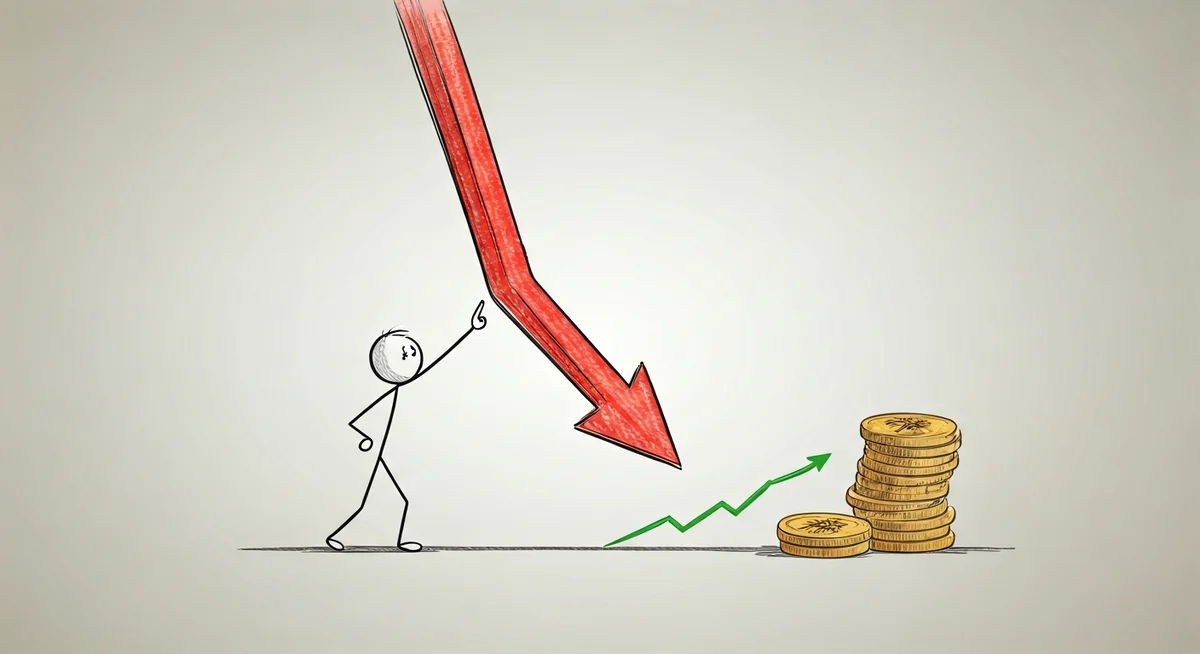
Key Economic Indicator Changes 2020-2023
| Indicator | 2020 | 2021 | 2022 | 2023 |
|---|---|---|---|---|
| US CPI Increase Rate | 1.4% | 4.7% | 8.0% | 4.1% |
| Eurozone CPI Increase Rate | 0.3% | 2.6% | 8.4% | 5.4% |
| M2 Money Supply Growth Rate | 25.1% | 13.0% | 6.5% | 2.8% |
† Based on 2025-26 data, subject to market fluctuations
Source: Official announcements from the US Federal Reserve (Fed), European Central Bank (ECB)
📖 Related: Dolphin POD Price Prediction 2026: What Do On-Chain Data Really Tell Us?
2026 Monetary Policy Outlook and Savings Value Scenarios
The shocking truth is:

Official statements indicate that major central banks are likely to maintain a hawkish stance until 2026 to achieve their inflation targets. However, if concerns about an economic recession grow, the possibility of a policy shift cannot be ruled out. This uncertainty presents two contrasting scenarios for the value of savings. What will happen?
Scenario 1: Sustained Tightening and Inflation Moderation
If central banks adhere to their current tight monetary policy until 2026 and successfully control price increases to their target levels, the real value erosion of savings is expected to be limited. In this case, traditional savings products or low-risk asset investments could still be viable strategies. This would serve as a counter-argument to the question, "'Why would I save money when they print it 2026?'" Related: Central Bank Strategies for Achieving Inflation Targets
Here's the real kicker:
Scenario 2: Fiscal and Monetary Easing for Economic Stimulation
If a severe economic recession occurs before 2026, and governments and central banks respond with large-scale fiscal spending and an expansion of the money supply, inflationary pressures could re-emerge. In this scenario, the depreciation of currency value could accelerate, significantly reducing the real purchasing power of savings. In this case, interest in real assets, inflation-hedging products, or alternative assets like cryptocurrencies could increase. This is crucial, as it suggests that the concern, "'Why would I save money when they print it 2026?'" could become a reality.
📖 Related: May 21, 2026: The Real Variables Hidden Behind Crypto's 'Daily General Discussion'
Investor Checklist: Key Savings Strategies for 2026
Let's look at the subsequent actions. When formulating savings strategies for 2026, investors should carefully consider these three key factors:
Wait, one more thing:
- Central Bank Monetary Policy Stance: Continuously monitor changes in interest rate hikes and quantitative tightening policies by major central banks, including the Federal Reserve. Their announcements and policy directions directly impact inflation and currency value.
- Global Economic Growth Rate and Recession Risk: The possibility of a global economic slowdown or recession significantly influences government fiscal policy and central bank monetary policy. If policies aimed at economic stimulus are implemented, inflationary pressures could intensify again.
- Diversification of Personal Asset Portfolio: It is crucial to build a balanced portfolio between inflation-hedging assets (e.g., real estate, commodities, certain cryptocurrencies) and traditional financial assets (bonds, stocks). This can be an effective way to prepare for potential currency depreciation.
Frequently Asked Questions
Q: Is there any basis for the prediction that the money supply will surge in 2026?
A: Currently, there are no official announcements forecasting a sudden surge in the money supply at a specific point in 2026. However, depending on changes in economic conditions, such as a recession, there is always a possibility that central bank monetary policy could shift towards expanding liquidity.
Q: What are the most effective assets for inflation hedging?
A: Inflation-hedging assets can vary depending on market conditions and individual investment preferences. Generally, real assets (real estate, gold), Treasury Inflation-Protected Securities (TIPS), and certain cryptocurrencies are considered inflation hedges. Experts recommend managing risk through diversification.
Q: If the interest rate on a savings account is lower than the inflation rate, are savings meaningless?
A: If the real interest rate on a savings account is negative, meaning the interest rate is lower than the inflation rate, the real purchasing power of savings decreases. However, savings still play a crucial role in securing emergency funds and managing short-term liquidity. For long-term wealth accumulation, investments aiming for returns that exceed inflation may be necessary.
We will continue to track and report on the developments of this matter. In 2026, what value will your savings hold? The answer to this question depends on your wise investment decisions.
About the Author
News Editor — Senior Crypto AnalystExpertise: Cryptocurrency Trading, Risk Management, Bitcoin Technical Analysis
Last Reviewed: 2026-07-05
⚠️ Investment Risk Disclaimer: This content is for informational purposes only and does not constitute investment advice. Cryptocurrency investments carry the risk of principal loss, so please consult with a professional before making any investment decisions. Past performance does not guarantee future results.
🔔 Need Real-Time Coin Alerts?
CoinPing monitors 11 exchanges 24/7 and instantly notifies you of pumps, dumps, and new listings via Telegram.
Start for Free →💰 Crypto Price Calculator
⚠️ Investment Disclaimer: This article is for informational purposes only and does not constitute financial advice. Cryptocurrency investments involve significant risk of loss. Never invest more than you can afford to lose. Read our full disclaimer →
🤖 AI Disclosure: This content was created with AI assistance (Google Gemini 2.5 Flash) and reviewed by our editorial team. Learn about our editorial process →